
The Riveting, Readable Robert Harris
I’m in awe of this storyteller

I try to remind myself that Olympic skiers and skaters are human, even though their feats seem impossible to me. I have a similar reaction when I’m listening to wonderful musicians and watching dancers spin and fly across the stage. Their mastery of their craft seems magical.
Are there comparable conjurers in historical fiction—authors who make the fearsome demands of writing and publishing seem like a piece of cake? For me, one nominee is Robert Harris. He’s impressively prolific and reliably intelligent and entertaining.

Harris has published sixteen novels, and so far I’ve read five. I’ll set out my specific reasons for admiring him below, but first, let me list the works I’ve read:
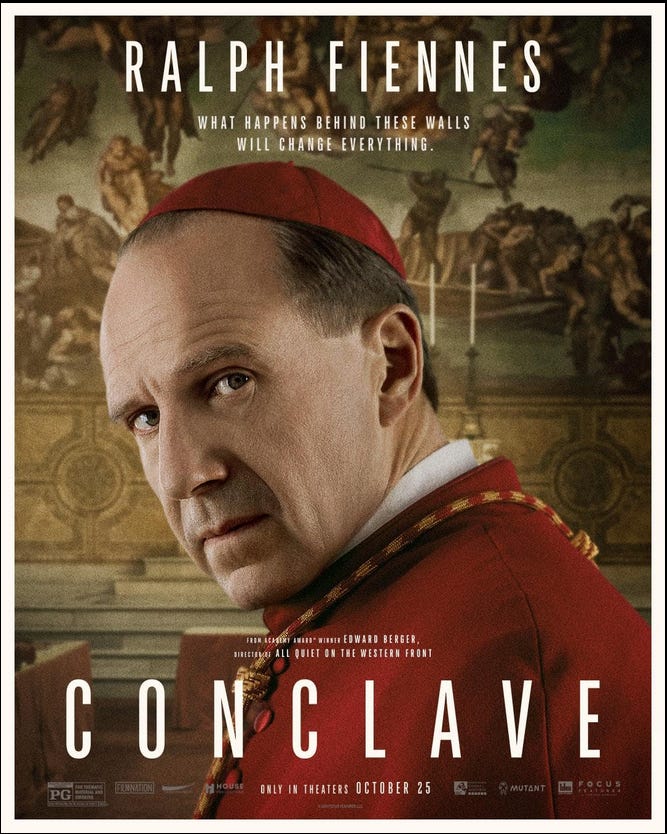
Conclave: A fictional papal election.
You may have seen the gorgeous movie starring Ralph Fiennes and Stanley Tucci. But I found the Harris novel even more absorbing. I compared the two in this post last year.
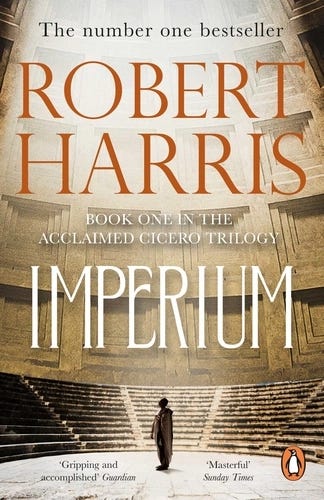
Imperium: The rise of Cicero.
Harris depicts Cicero as a young lawyer battling the treachery and corruption of Rome.
An Officer and a Spy: The Dreyfus Affair.
The protagonist is Marie-Georges Picquart, a French military officer who fought for Dreyfus’s pardon. Harris juxtaposes Picquart’s commitment to the truth with the French military’s deceit and cowardice. Some readers will see contemporary parallels.
Act of Oblivion: “The regicides.”
In 1649, 59 men signed the execution warrant for King Charles I, who was beheaded shortly afterward. But a decade later, after the restoration of the monarchy, the crown began to hunt them down. Harris dramatizes a cat-and-mouse chase for two who fled to the American colonies.
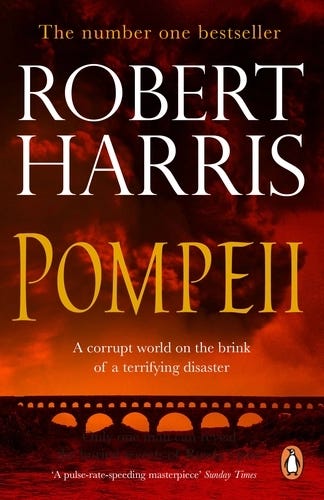
Pompeii: The 79 AD disaster.
I just finished this, and it’s the novel that prompted me to write this post. The hero is an engineer who supervises the aqueduct near Vesuvius, and Harris’s depictions of the aqueduct’s workings and Pompeii’s luxurious seaside villas are hypnotic. The end is no surprise, of course, but readers get to inhabit in this lost world days before it disappeared.
My reasoning
What impresses me about Harris? Why do I keeping buying his books? Having written a historical novel myself, here’s what wows me:
He’s a time traveler.
Many historical novelists write multiple books set in an era they’ve come to know. One dazzling example is C. J. Sansom who completed seven detective mysteries set in Tudor England, each one suffused with historical ambience. But Harris moves from era to era—from the ancient world to colonial America to World War II. Like all historical novelists, he blends documented fact with fictional elements, namely invented characters and their personal story lines. But his background elements are solid, and I’ve always learn something new from his novels. That’s in addition to reveling in them. During Pope Leo’s election last year, newscasters called on the Conclave author for expert commentary on the secret papal balloting. That’s how good his research is.
He’s a craftsman.
Harris summons up the past without resorting to yadda, yadda, yadda descriptions or plodding detail dumps. In Imperium, Cicero’s risky clash with a powerful, well-connected murderer named Veres takes place in the Roman Forum—it’s pure David and Goliath. But in Harris’s hands, the Forum is more than a monumental arrangement of plazas, columns, and statuary. It’s alive with danger, noise, and a restive, unpredictable crowd.
He’s a storyteller.
Harris’s books move right along, thank you very much. His novels have conflict, plot, tension, a satisfying build and a gratifying end. Sometimes, his last pages surprise me. In An Officer and a Spy, the now acquitted Dreyfus meets with Picquart, who jeopardized his own freedom to reveal the truth. No obligatory celebration or syrupy gratitude. Instead, you watch two imperfect men who’ve upended French politics go their separate ways. Brilliant.
He writes about honorable men.
I’ve been wolfing down novels about history’s ignored and underrated women, and luckily, historical fiction is a welcoming space for them. Even so, half the world’s humans aren’t women, and honestly, I’m tired of reading about oddly detached spies and superheroes or whiny, self-absorbed males who can’t get their act together.
Some experts believe our culture no longer offers young men enough stories about brave, principled males. But Harris’s heroes, be they Roman lawyers or French military officers or contemporary men of the cloth, are decent, thoughtful human beings facing bedeviling circumstances. They work their way through doing the best they can. One reason I prefer the Conclave book to the film is that Harris puts you inside the head of the Ralph Fiennes character who is managing the papal election. His mindset fascinated me.
I love reading about good men—not flawless or sanctimonious, but responsible and well-intentioned. Robert Harris has supplied a string of them. So, if you’re aiming to interest a young man—or any young person—in exciting books about admirable male human beings, I don’t think you can do better than Harris.
What would I like to read now?
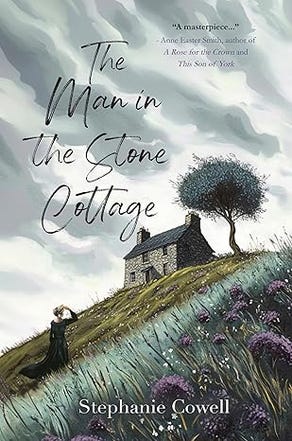
I choose different kinds of books at different times, depending on my mood. And if I’m looking for beautifully written prose that produces shimmering, unforgettable images, I wouldn’t reach for Robert Harris. Some of my top picks in that category would be David Malouf’s Ransom (about Priam’s journey to beg Achilles for Hector’s body) or Stephanie Cowell’s The Players (about the young Shakespeare) or her newest release, The Man in the Stone Cottage (about the Bronte sisters). These novels contain scenes I doubt I’ll ever forget.
But if I’m looking for a smart, perceptive page-turner to whisk me into the past, I head straight to Harris’ books. Next up for me is Munich, which chronicles four days in 1938 prior to the outbreak of World War II. Marc Friedman recently reviewed it on Substack:
“Harris captures the claustrophobia of Munich: the cramped rooms, the feverish rush of diplomatic notes, the gnawing sense that everything is slipping out of control. And he builds tension not by inventing drama but by making us live through the uncertainty of those hours, as if we ourselves did not know what would happen next.”
Okay, I’m in. And what a great summary of Harris’s skill.
What about you? Are you a member of the Robert Harris fan club? Or maybe you have another favorite you turn to when you’re looking for great storytelling “ripped from the pages” of history? Tell us.

His novel Precipice is also very good! Makes good use of Prime Minister Asquith's historic letters to create the narrative.
I didn't know Harris, although I loved the Conclave movie. Such a variety of subjects, but I think I'll pick up "Ransom" first - lyricism always draws me and I love the Iliad. I can recommend The Silence of the Girls by Pat Barker and A Thousand Ships by Natalie Haynes if you'd like to read about the women inhabiting that epic. Oh, and The Man in the Stone Cottage was great -